Research

My research sits where statistics meets real systems. I work on time series inference, forecasting, and machine learning, and I also study how to make everyday digital systems, like attendance and identity checks, harder to cheat.

Statistical Inference & Time Series

Time SeriesQMLERobust Inference

ARMA/QMLE Under Weak Dependence

Standard ARMA methods assume the random shocks are fully independent, but real data often breaks that rule. I study how to draw reliable conclusions when the shocks are only weakly dependent, with a focus on robust standard errors and how they perform in realistic sample sizes.
ForecastingFinancial Time SeriesMachine Learning

Financial Forecasting Across Price and Return Tasks

Forecasting prices and forecasting returns are very different problems, and mixing them up can make a model look better than it is. This project compares statistical and machine learning methods on each task separately, using expanding-window, one-step-ahead forecasts.

Financial ModelingStationaritySimulation

Gaussian Financial Modeling with Bond Factors

This project looks at how a Gaussian financial model driven by bond factors behaves over the long run. My current work focuses on the stationary distributions of key log-scale state variables and what they say about long-term uncertainty.

Prediction, Machine Learning & Uncertainty

Computational Social SciencePredictive ReliabilityUncertainty

Forecasting Relationship Dissolution Across Three- and Five-Year Horizons

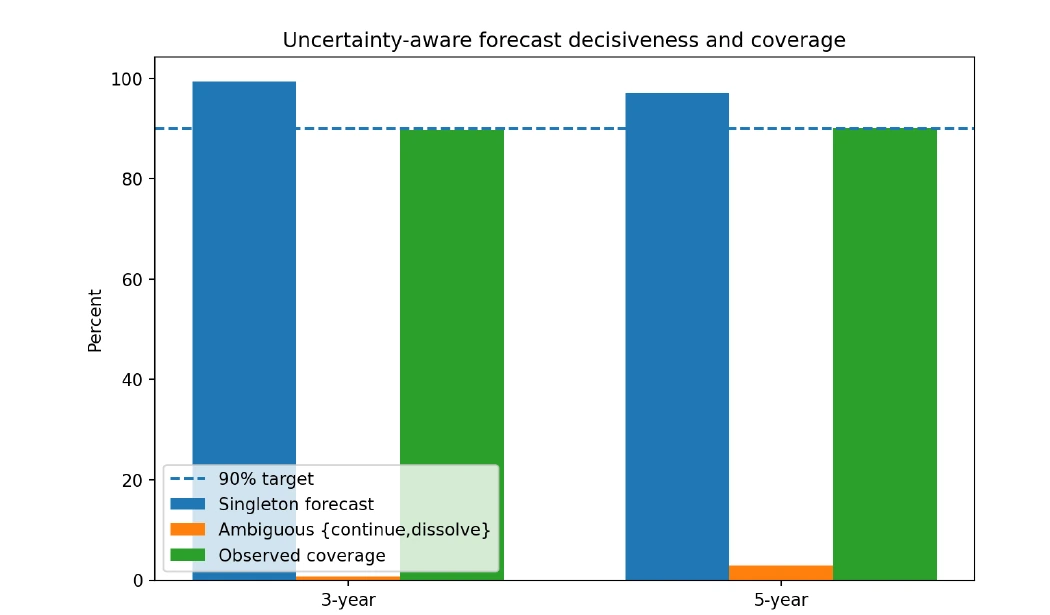
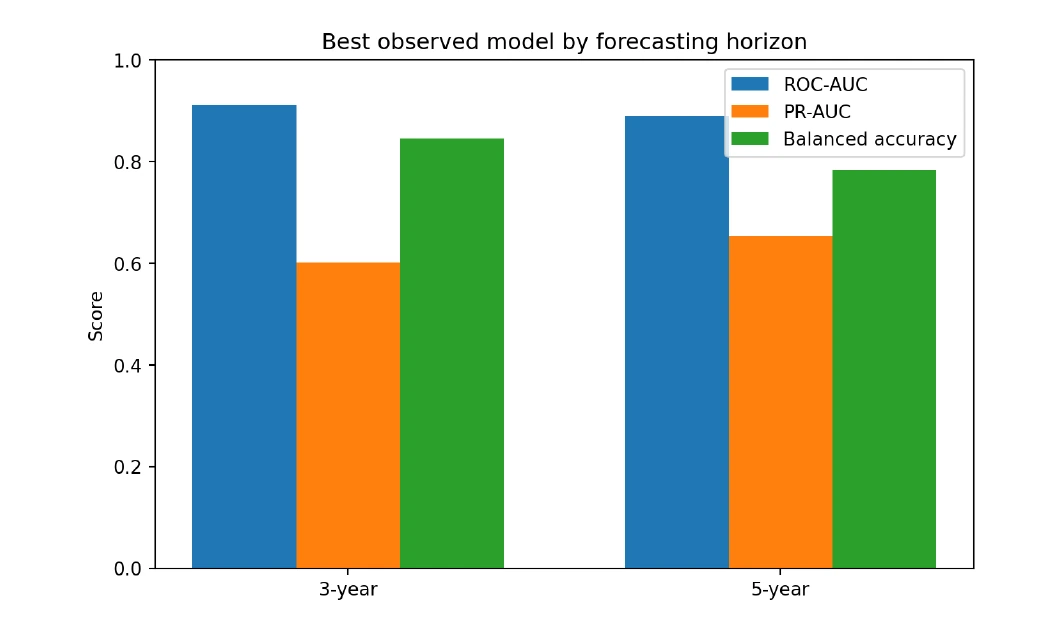
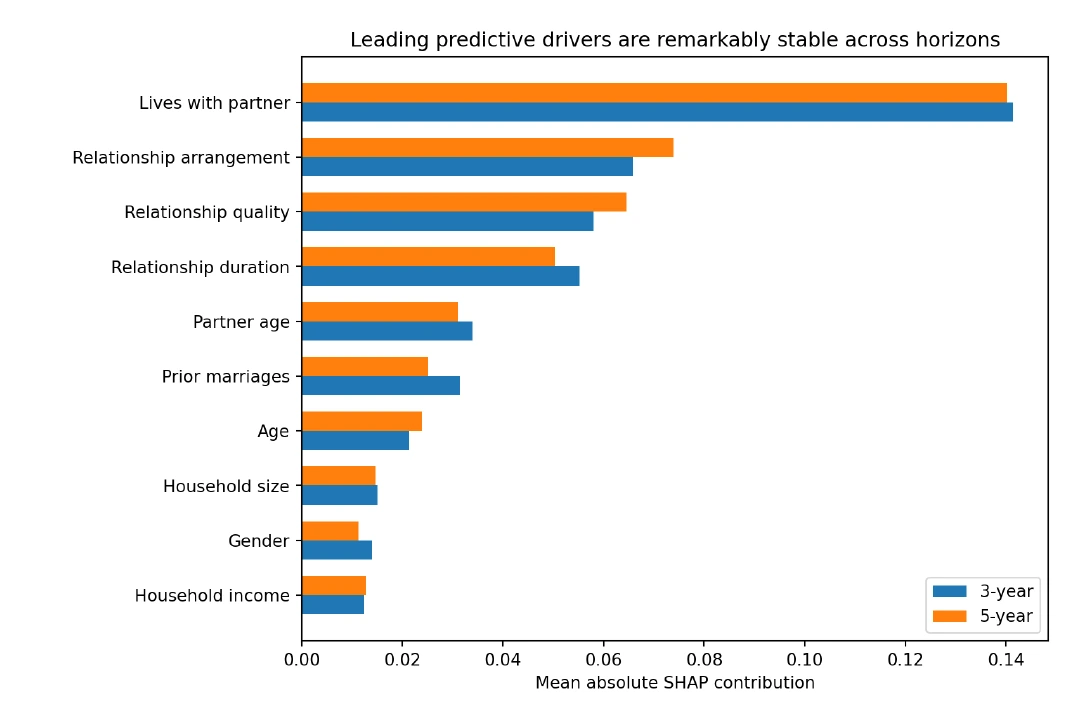
Can we predict whether a relationship will last, and how far ahead can we trust that prediction? Using long-term relationship data, I compare forecasts three and five years out, looking at accuracy, whether the main drivers stay the same, and how much uncertainty surrounds each prediction. The goal is reliable prediction, not claims about cause.

Relationship dissolution model performanceCross-horizon explanation stabilityConformal uncertainty results

Trustworthy Digital Systems

Protocol EvaluationGeofencing

Session-Bound Attendance Protocols

A single photo of a QR code can let someone check in without being in the room. This work designs and tests a protocol where the server issues short-lived codes tied to each session and checks location while allowing for GPS error, then measures how often it wrongly accepts or rejects people.

Multimodal FusionFacial VerificationGeolocation

Multimodal In-Person Verification

Location alone can be spoofed, and a face check alone can be fooled. This project studies how to combine the two to confirm someone is really present, comparing ways of merging the evidence by how often each one wrongly accepts or rejects a person.

Earlier Research

Public HealthSimulationApplied Modeling

Malaria Modeling & Public Health Analytics

Earlier in my career, I used intervention analysis, district-level data, and simulation to study malaria control, with the aim of giving public health decision makers clearer, evidence-based answers.